
Testing out this piece of software that came with my windows 7 install. Adobe contribute apparently allows you to edit your blog inside its own browser with a whole bunch of different adobe-ish options. Anyone at RPI who had re-imaged to W7 should have it. I'll play around with it some more when I get the chance.
Thursday, December 31, 2009
Friday, August 14, 2009
R.I.P. Les Paul, Legend, Father of Rock


 Musician, inventor, and genre pioneer Les Paul died yesterday at the age of 94. He invented the solid-body electric guitar in 1939, and multi-track recording in 1948, revolutionizing music and creating multiple generations of rockers. He built his own tools, blazed his own trail, changed the world with a smile on his face and put one on ours through the bands that use the technologies he pioneered. He will be missed and remembered any time an electric guitar is played.
Les Paul, you rocked. We salute you.
RPI Technology Blog (TechnoBlag)
Saturday, August 8, 2009
I Sh*t You Not, It Was Smoke. Seriously.
I had completely forgotten about this video when I went down to Kings Dominion yesterday afternoon, but at about 3 PM I was confronted with the shocking(ly mundane) truth. I watched the flame on top of the volcano ride spout furiously to announce the exit of the ride's passengers from its mouth. I felt its heat on my skin. I peered upward and observed a circular plume of smoke rise into the air and hang there for over almost 10 minutes. Next to me, a little boy shouted "Hey look! Smoke rings!" and I thought to myself: “We’ve evolved."
But even so, I still can't be convinced it wasn't UFO/sign for the almighty after watching this video. I mean, look at her eyes! I would believe anything that spouted from her sane and obviously neurotoxin free brain!
Thursday, August 6, 2009
HTML5 Love
 It's not Flash. It's the future.
Over the next few years, HTML5 is going to be phasing out HTML4 (what most websites are coded in today) and it offers some exciting new features, including streaming video and flash-like animations without the need for additional plug-ins.
This site is really cool, and coded completely in HTML5. It only works in Opera, Firefox 3.5 or Chrome though, so if you're using IE, feel free to join the 21st century at any time.
Wednesday, August 5, 2009
New Chrome Beta Adds Themes, More Speed
 Google released its new Chrome 3.0 Beta this morning. They've added a new themes gallery and juiced it up claiming "this beta release shows over 30% improvement on both the V8 and SunSpider benchmarks." On top of that, you can now customize your “New Tab" page (the page that pops up when you click for a new tab...duh) to have whatever links you want on it, not necessarily the ones you visit the most. Details about this release can be found on the Google Chrome Blog.
RPI Technology Blog (TechnoBlag)
Sunday, August 2, 2009
Pandora Is Only Good for 40 Hours a Month
 Since I only started using Pandora Radio last week, I wasn't aware that the 40 hours of free music was newly imposed limit. But there you have it: As of at least a week ago, you only get 40 hours of free music on Pandora before they shut you down and call you a mooch.
 Thanks to Dylan for the tip.
Friday, July 31, 2009
Broadband over Power Lines Gets Standardized… Sort Of
 What does that mean for you? It means the day when you can walk out of your house or apartment, or into the Great American Desert, and still be connected to the Internet is fast approaching. (And by fast, I mean it could happen in your lifetime).
Last week, the IEEE approved “IEEE Standard P1901,” a standard that's supposed to outline a universal way to connect devices to a broadband network using power lines. It also standardizes a way to connect current Ethernet and WiFi devices to a Broadband over Power Lines (BPL) network. The problem is that it only gets us half way there. While they are calling it a standard, what’s really been drafted is two standards (FTT and Wavelet PHYs) that don’t necessarily work well together.
Still, this is a major step forward for BPL since there wasn’t a true industry standard before this, meaning BPL devices up until now could, and did, interfere with other BPL devices running on the same network. We’ll still have some of that unless they can settle on one true standard, but this is a step in the right direction.
Broadband over Power Lines devices have been available for awhile now, like NETGEAR’s “Powerline AV Ethernet Adapter” that allows you to “turn any electrical power outlet into a high-speed Internet and home network connection.” Those devices allow you to create a broadband Ethernet connection anywhere you have a power outlet, making for a much faster and reliable connection than, say, 802.11g Wifi.
While BPL internet for your home isn’t a very popular option in the United States, using power lines as a backbone network for things like WiMAX could be very effective in providing fast internet connectivity over a wide area, like a city. WiMAX stations could also be connected to high voltage power lines in more rural areas and deliver the same quality of service without the need of an extra fiber-optic network. Wherever you have electricity, you could theoretically have a broadband Internet connection.
It’s going to be awhile before this gets any traction though. Those two “standards” will have to find some sort of common ground lest we see the equivalent of “Blu-Ray vs. HD-DVD” in the BPL world. That could take years.
Thanks to Andy for the tip.
Monday, July 27, 2009
New RPI Laptop Totally Owns Your Pansy T-61
It’s just….it’s just not fair. These laptops are way too good for the incoming 2013 class. They get a freakin’ webcam?! Just plain spoiled. I’ve taken the liberty to highlight every reason (in green) why the T-61 (or T-61p) you are most likely using to read this page is now a huge stinkin’ pile of outdated fail-in-a-can.

1 Terabyte Laptop Drive For Student With Lots of "Stuff"

Western Digital, the guys that make about a fifth of the world's hard-drives, announced the first ever 1 TB laptop hardrive for the kid who downloads a LOT of porn powerpoint-slides. The same drive comes in a 750 GB variety, but here's the bad news: our puny "UltraBay Slim" expansion slots only support drives with 9.7 mm form factor (the height of the drive), and these drives are 12.5 mm. For the spatially challenged, that means it won't fit. The good news is the 1TB version is out now as a USB external drive, and it's tiny. For only $250, that's a lot of portable space.
Saturday, July 25, 2009
The Dow is...

Over Nine-Thousaaaaand!! (What, Nine-Thousand?!)
Sorry. I've waited for months to say that. You can go back to your life now.
Friday, July 24, 2009
Awesome New "Tron: Legacy" Trailer of Awesomeness
You should all be excited for this. If you're not, you're either uneducated, uncultered, or frankly, un-American. Go watch the original Tron and then you may return. There, I said it. For for the rest of you, enjoy this new trailer, now featuring 75% more Jeff Bridges! (OMG Jeff Bridges!! YES!!!!)
Thursday, July 23, 2009
Collaborate On Projects With Etherpad
 Etherpad is a cloud based word processor that allows for real-time collaboration on documents with friends and co-workers. I've used this to
 RPI Technology Blog (TechnoBlag)
New Skype Headset Apparently Not a Piece of Crap

I need new headphones. I've had my pair of cheap, Sony, headsuckers for years. They've been dropped, stepped on, run over by deskchair... probably lit on fire. Who knows. And the Skull Candy set I bought to replace them makes me look more like the red teletubby than DJ Tiesto. I haven't been able to afford new 'phones since then, so the best part of this announcement is its price: $22.88. Apparently the sound quality is comparable to much more expensive products, it's foldable and lightweight and it.... still probably makes you look like a giant dork if you're using them for anything other than coordinating a SWAT team raid. Even then maybe... Still, I'll probably pick a pair of these up as long as they don't feel like they're breaking all three tiny bones in my ear after 30 minutes of use like mine do now.
Wednesday, July 22, 2009
New LIVE in August, Natal in 2010
 It's going to be a busy 12 months for Senior Microsoft el Boxo. The previously mentioned XBOX LIVE updates will be available August 11th, and the Project Natal will be shipping later next year, according to Digitimes. More updates for LIVE are also expected this fall, including integration with Facebook, Last.fm, Twitter, and full 1080p streaming video.
RPI Technology Blog (TechnoBlag)
Big Brother Amazon? Demystifying the Kindle and its Network

Now that the dust is finally starting to settle after the uproar surrounding Amazon’s recent deletion of unlicensed materials from their Kindle database and devices, let’s take a look at how the device, the network, and the laws that govern it actually work.
First, a refresher: Last week, Amazon learned that two of the titles it was sharing, George Orwell’s Nineteen Eighty-Four and Animal Farm, via a third party seller were unlicensed by that seller and were therefore illegal to distribute. Amazon promptly deleted the titles from their database so no more copies could be sold. The big hullabaloo was caused by Amazon going a step further by deleting those titles from every Kindle that had already downloaded a copy of the illegal material. amazon then refunding the purchase price to the user. Cue mass panic, anger, and spectacular irony.
While many were outraged by this apparent breach of privacy (and contract) others, like me, were left wondering: “Huh? They can do that?” Apparently, yes they can. For now, I’ll just talk about how the Kindle works and how this was able to happen. I’ll leave the conspiracies to thecrazies conspiracy theorists.
What is the Kindle?
The Kindle is a wireless device sold by Amazon.com that allows users to download print media, like novels and newspapers, to be read anywhere, anytime, once the Kindle finishes downloading an item. It uses a special technology called E-Ink that makes the downloaded media look more like it is printed on a page of paper, and less like a computer screen, so it's easier on the eyes. Amazon claims the Kindle can hold up to 3,500 books at a time.
How does the Kindle network work?
I was struck one evening at the dinner table when a friend of mine floundered for a way to describe the Kindle network and eventually resigned to saying “It just automatically connects anywhere! It’s just their own thing! It doesn’t need a cell tower or anything.” To me that sounded like pure friggin’ magic, and knowing a bit about networking myself, I knew the Kindle had to connect to the Amazon database through some conventional means, like a cell phone or a laptop connects to the internet. Unsurprisingly, Kindle uses something else in the place of magic to download digital media.
The Kindle is connected to Amazon via a 3G network, called "Whispernet", that is run by the telecommunications giant Sprint. Generally, Sprint has very good coverage with it’s 3G network throughout the United States, so Amazon’s claims that you can download media anywhere, without a computer, is just as valid as Sprint saying their 3G network is accessible anywhere you want to go. This may or may not be true, depending on how far you are from the nearest cell tower. The newer Kindle DX versions also have a fallback 2.5G 1xRTT network to connect to, in case 3G fails in some areas. Additionally, you might notice that the Kindle is exclusive to the United States. That’s because Amazon is still working out deals with telecommunications providers in Europe and other places to host “Whispernet” overseas.
How can they delete my books?!
Now for the tricky part: “3G” is based on a technology called “Evolution-Data Optimized”, or “EV-DO” which in turn uses a technique called “Code Division Multiple Access”, or “CDMA.” What these technologies allow for, to put it simply, is a tons of people using the same frequencies, hubs and routers to access different data. In other words, a whole bunch of Kindle users can be sitting right next to each other and download different material at the same time. However, in order to do this, each kindle must have a unique virtual address, like the IP address on your computer. Just like your computer, if someone has your IP address and you have unsecured or shared data, someone else on your network can access, modify, and delete data stored within. Since Amazon keeps track of all of its transactions, it is a very simple matter for them to access all of the Kindles that downloaded the material in question and delete it.
But… are they allowed to do that?
This part is… fuzzy to say the least. Critics site Kindle’s Terms of Service Agreement that states:
This suggests that anything you buy, you own, and therefore Amazon can't delete something you've already bought without your permission. However, Amazon uses a proprietary file format called “AZW” that is only readable on the Kindle. Amazon’s DRM policy does not include right of first sale, meaning anything you download you get a temporary license to use, like computer software. You don’t own it; you rent it, and if Amazon decides the license you have is invalid, your file goes “bye-bye”.
So, to sum it up; Anything you buy to read on the Kindle is yours no matter what, unless it is an AZW file, in which case you rent a license to use it. This seems like a Catch-22 scenario at first, but newer Kindles allow limited access to other file formats, like PDF, which to my understanding is not subject to Amazon’s DRM policy. In the case of the George Orwell novels, however, AZW was used.
Even so, Amazon has noted the public’s disapproval in the way they handled the situation, legal or not. Amazon spokesman Drew Herdener has said they are "… changing our systems so that in the future we will not remove books from customers' devices in these circumstances." We’ll just have to wait and see.
First, a refresher: Last week, Amazon learned that two of the titles it was sharing, George Orwell’s Nineteen Eighty-Four and Animal Farm, via a third party seller were unlicensed by that seller and were therefore illegal to distribute. Amazon promptly deleted the titles from their database so no more copies could be sold. The big hullabaloo was caused by Amazon going a step further by deleting those titles from every Kindle that had already downloaded a copy of the illegal material. amazon then refunding the purchase price to the user. Cue mass panic, anger, and spectacular irony.
While many were outraged by this apparent breach of privacy (and contract) others, like me, were left wondering: “Huh? They can do that?” Apparently, yes they can. For now, I’ll just talk about how the Kindle works and how this was able to happen. I’ll leave the conspiracies to the
What is the Kindle?
The Kindle is a wireless device sold by Amazon.com that allows users to download print media, like novels and newspapers, to be read anywhere, anytime, once the Kindle finishes downloading an item. It uses a special technology called E-Ink that makes the downloaded media look more like it is printed on a page of paper, and less like a computer screen, so it's easier on the eyes. Amazon claims the Kindle can hold up to 3,500 books at a time.
How does the Kindle network work?
I was struck one evening at the dinner table when a friend of mine floundered for a way to describe the Kindle network and eventually resigned to saying “It just automatically connects anywhere! It’s just their own thing! It doesn’t need a cell tower or anything.” To me that sounded like pure friggin’ magic, and knowing a bit about networking myself, I knew the Kindle had to connect to the Amazon database through some conventional means, like a cell phone or a laptop connects to the internet. Unsurprisingly, Kindle uses something else in the place of magic to download digital media.
The Kindle is connected to Amazon via a 3G network, called "Whispernet", that is run by the telecommunications giant Sprint. Generally, Sprint has very good coverage with it’s 3G network throughout the United States, so Amazon’s claims that you can download media anywhere, without a computer, is just as valid as Sprint saying their 3G network is accessible anywhere you want to go. This may or may not be true, depending on how far you are from the nearest cell tower. The newer Kindle DX versions also have a fallback 2.5G 1xRTT network to connect to, in case 3G fails in some areas. Additionally, you might notice that the Kindle is exclusive to the United States. That’s because Amazon is still working out deals with telecommunications providers in Europe and other places to host “Whispernet” overseas.
How can they delete my books?!
Now for the tricky part: “3G” is based on a technology called “Evolution-Data Optimized”, or “EV-DO” which in turn uses a technique called “Code Division Multiple Access”, or “CDMA.” What these technologies allow for, to put it simply, is a tons of people using the same frequencies, hubs and routers to access different data. In other words, a whole bunch of Kindle users can be sitting right next to each other and download different material at the same time. However, in order to do this, each kindle must have a unique virtual address, like the IP address on your computer. Just like your computer, if someone has your IP address and you have unsecured or shared data, someone else on your network can access, modify, and delete data stored within. Since Amazon keeps track of all of its transactions, it is a very simple matter for them to access all of the Kindles that downloaded the material in question and delete it.
But… are they allowed to do that?
This part is… fuzzy to say the least. Critics site Kindle’s Terms of Service Agreement that states:
"Upon your payment of the applicable fees set by Amazon, Amazon grants you the non-exclusive right to keep a permanent copy of the applicable Digital Content and to view, use, and display such Digital Content an unlimited number of times, solely on the Device or as authorized by Amazon as part of the Service and solely for your personal, non-commercial use."
This suggests that anything you buy, you own, and therefore Amazon can't delete something you've already bought without your permission. However, Amazon uses a proprietary file format called “AZW” that is only readable on the Kindle. Amazon’s DRM policy does not include right of first sale, meaning anything you download you get a temporary license to use, like computer software. You don’t own it; you rent it, and if Amazon decides the license you have is invalid, your file goes “bye-bye”.
So, to sum it up; Anything you buy to read on the Kindle is yours no matter what, unless it is an AZW file, in which case you rent a license to use it. This seems like a Catch-22 scenario at first, but newer Kindles allow limited access to other file formats, like PDF, which to my understanding is not subject to Amazon’s DRM policy. In the case of the George Orwell novels, however, AZW was used.
Even so, Amazon has noted the public’s disapproval in the way they handled the situation, legal or not. Amazon spokesman Drew Herdener has said they are "… changing our systems so that in the future we will not remove books from customers' devices in these circumstances." We’ll just have to wait and see.
RPI Technology Blog (Techno blag)
Tuesday, July 21, 2009
USB 3.0 is Sexy, Blue, and Wicked Fast
 According to gizmodo.com, guru of everything gadgets, computer hardware company ASUS is ready to release the first ever USB 3.0 compatible motherboard. More PCs featuring USB 3.0 are supposed to make their way into the market later this year, and by the end of next year it will undoubtedly be the standard for connecting devices to a computer. So it begs the question: what is USB and how is this USB different from what I already have?
USB stands for “Universal Serial Bus”, and it was developed in the 90’s as a standard way of connecting a variety of different computer components and peripherals to a system. Today, it allows for PC interfacing with mice, keyboards, thumb drives, cellphones, portable gaming systems, lab testing equipment (like RPI’s Mobile Studio) and a ton of other devices. What is special about USB, and makes it preferable over other interfacing serial port solutions (like on old printers) is its ability to power whatever component it is connected to (think of a USB mouse or a PS3/XBOX 360 controller). Speed was also a selling point, with a transfer rate of 12 Mbit/s (1.4 Megabytes per second) for USB 1.0, and then 480 Mbit/s (57 Megabytes per second) with USB 2.0.
 USB 3.0 offers similar advances, transmitting at 5 Gbits/s (596 Megabyts per second)! To put that in perspective, the hard drive in your computer, connected with the latest SATA interface can only transmit at up to 3 GBits/s. In other words, USB 3.0 is now the fastest way to transmit data between computer components, including hard drives/SSD.
Additionally, it will provide 15 W, 12–25 V of power to compete with FireWire, which has the same power specification. Since there are still very few products using USB 3.0, it’s also good to note that USB 2.0 peripherals will be compatible with the new USB 3.0, but will run at USB 2.0 speeds. But don’t go throwing out your hard drive just yet. The biggest thumb drive available that uses USB 3.0 is only 256 GBytes, and will run you about $900. Even worse: this drive in particular has read/write speeds of 20 MB/sec and 10 MB/ sec respectively, so you won’t be able to store data nearly as fast as you transmit it. Still, it looks like the days of waiting half an hour to transfer a movie to a thumb drive are numbered. Look for some exciting, high speed tech to be making its way onto shelves by the end of this year.
RPI Technology Blog (TechnoBlag)
Monday, July 20, 2009
I want to go to E3, and I want you with me
While Otakon has firmly found a position in the realm of "been there, done that", it got me thinking of summer time events I really want to experience. At the top of that list? Electronic Entertainment Expo 2010. In 2006 the Expo was slimmed down to a very select group of individuals deeply involved in the gaming industry, including developers and top press outlets. Developers, unsurprisingly, were disappointed the event's turnout, so it was reopened to the public last year. Next year it will be open to all of us again, and I want to be there. From Starcraft 2, Diablo 3, Project Natal updates, Gears of War 3....and God knows what else they'll be announcing(not to mention demoing) I can't think of a time better spent than indulging my inner gamer with the latest and greatest from the gaming world as it happens, June 12-14 2010.
Of course, the biggest issue will be cost. That's why I'm bringing this up now, instead of say, next April. From what I can tell, we can get round trip tickets to LA form the east coast, which would be the most expensive in estimation since it's the longest distance from the west coast, for under $300. Hotels within a mile of the convention center go for $69-$199 a night, which we would split amongst ourselves. Add on top of that a $50 entry fee, and we should be able to do this for under $600 a person; Under $500 if we book early enough and pick a reasonable hotel location.
We have plenty of time to work this out, save up, and if all goes well, give our future employers advance notice of our absence. It seems like a pretty big task, I know, but It should be tons of fun. I really want to get a small RPI (and friends!) coalition out there if we can. All we really need to do is spend money wisely over the course of the school year and we'll have paid for an experience we'll never forget. Whatch'ya think?
Saturday, July 18, 2009
You're Not Here, But You're Not Missing Anything
Otakon 2009. Overpriced food and admission. Lots of great cosplay, and some terribly disturbing ones. We wasted the better part of an hour in the game room yeserday waiting for a spot to play Gears 2. It never came. The problem isn't with the game room though, so much as some of these kids who sit down and think they own the system they are playing on. We walked around a bit and found some great, lesser known games, on older systems I've never heard of (like the KIKI, which I couldn't find anything on by searching through google). We'll be hitting the dealers room and a few panels today before calling it a weekend. If this sounds like the Otakon from years past, you're right. Nothing's changed much, so if you're not here, you're not really missing anything.
Friday, July 17, 2009
Pirate Bay Getting Legal Using Your Computer
We heard a few weeks back that the Pirate Bay was getting sold to Swedish Internet Cafe company Global Gaming Factory X. Today we got a look at how Pirate Bay 2.0 is going to work.
Basically, all members are going to have to pay a small monthly fee to use the site, but how much you pay will depend on how much of your computer you're willing to let the Pirate Bay use to... launch cyber attacks against the government and take over the world. Or something. I really have no idea.
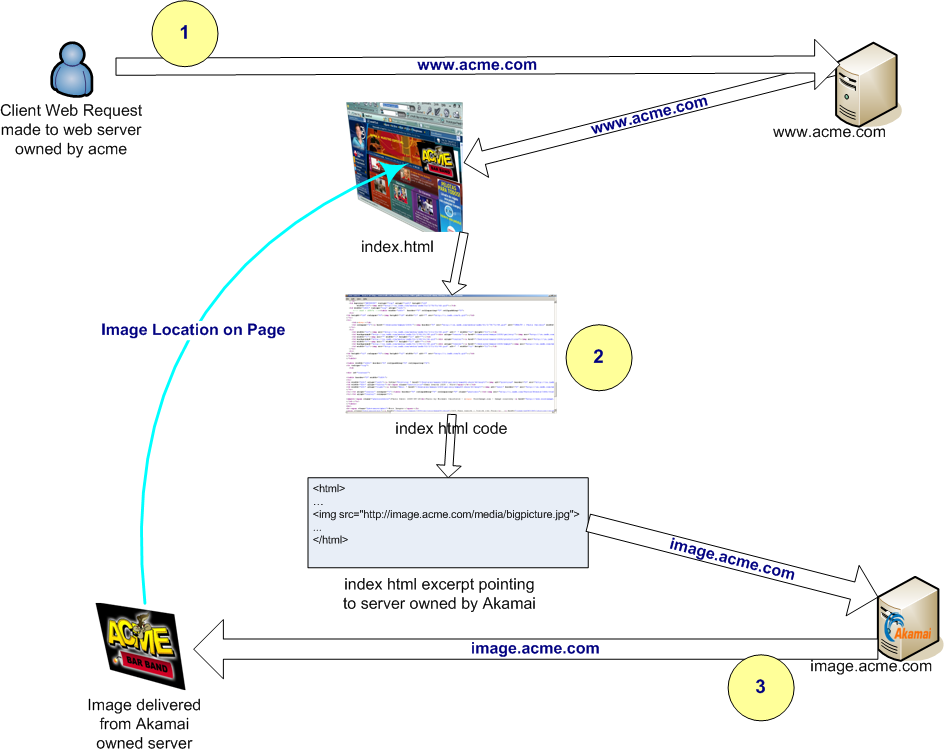
Apparently whatever computing recourses you offer will be used to create a giant cloud-computing network to compete against services like Akamai and Amazon's Elastic Compute Cloud (EC2). Those services allow users to rent computing systems to run whatever applications they like, over the internet. But with those companies, all of the computing power comes from servers they own. This would be different. Technically, in exchange for torrenting with Pirate Bay, you'll be selling your computer's recourses to help run applications that someone else wants to run. Then, with the money Pirate Bays get from you, renting out your computer, and the money they get from the other guy, using your computer, they'll pay the TV, music, and gaming industry for the rights to distribute their products.
We've been hearing for awhile now that "Cloud Computing is the Future!", and that may be so, but I get a bit twingy at the thought of processes running on my computer I know nothing about. It's going to be a tough sell if they want to make this work, especially since sites like mininova.com still exist for pirates to get their hands on whatever they want for free.
If RPI Had An English Class...
Their papers would probably look something like this...

http://www.collegehumor.com/picture:1916681
Supposedly it reads:
"Poem.You translated my poem, I congratulate you.
I wish I could rhyme with poem,but its very hard to.
I just beguiled you,"
http://www.collegehumor.com/picture:1916681
Supposedly it reads:
"Poem.You translated my poem, I congratulate you.
I wish I could rhyme with poem,but its very hard to.
I just beguiled you,"
Otakon Starts Today
I was a little late getting on this train. I only decided to go yesterday. Assuming you're not all already there, who is going? When are you getting there? Where do you want to meet up?
Thursday, July 16, 2009
New LIVE Updates Coming Soon
Yeah….wow. There’s honestly too much stuff in this update for me to dig through it, so I’ll just touch on some highlights.
The Good:
The biggest apart of this update is hands down downloadable Games on Demand. Frankly, I’m surprised it’s taken Microsoft so long to roll this feature out, as I was looking for something like it a year ago. It would be nice, though unlikely, if we get discounts on GoD since we won’t be paying for packaging or disc media. What’s more likely is a system like Steam, where certain titles are marked down for weekends at a time, though something like that would still surprise me.
Awardable clothing seems like it could be fun. Gimmick, yes, but as long as it’s free that could be cool. It’s not like my avatar looks a thing like me anyway. I wouldn’t mind putting a Spartan helmet on to hide that fact.
Pre-subscription-termination notification should be very useful, lest you get charged an extra $10 a month when they automatically charge your credit card to renew LIVE.
The Bad:
While free awardable stuff for your avatar is O.K. in my books, having to pay for certain “premium” items is not. That’s just ridiculous, and should be placed in the same category of insanity as paying for sprite image “presents” on Facebook or that golden armor DLC in Elder Scrolls. While I understand Microsoft going for this because undoubtedly there are people who go for this type of thing, I shed a little tear for humanity every time someone buys one of these virtual items.
Pure Silliness:
Netflix movie parties? At first I was skeptical, but I don’t see any harm in this. I can imagine a slow weekday night while away at school I might want to pop something on run my own MST3K style commentary with some friends over LIVE on Armageddon or something. But that brings up another point: can we please get some good movies available on instant queue? There is so much crap that riffing is really the only application I can think of for a “movie party.” Maybe if something good was available I could think of something else.
Gizmodo.com has a list of all the updates. You can find that here.
-TRC
Harry Potter 6 is "O.K."
As I sat there, a mere fifteen feet from the towering silver screen, craning my neck backwards and peering upwards so that the picture was fully within my field of view, I thought to myself “Damn… I am really way close to this movie screen.” That type of situation is to be expected when you arrive at an 8:20PM showing of Harry Potter and the Half-Blood Prince at 8:20PM. All but a few isolated seats were occupied in each of the three mega theaters showing the film in
As is the case with many book-to-movie films, a lot had to cut out. It’s understandable that, like the previous HP movies, time is streamlined in order to get a full school year into a few hours. It’s even understandable that entire sections of the book would need to cut out in order to make room for major plot points. It’s a problem, however, when you walk away from a movie with “The Half Blood Prince” in the title knowing next to nothing about who the Half-Blood prince is, and why we should care about him.
Admittedly, this was a short coming of the book itself, but at least we learn the origin of the name “Half-Blood Prince” and the scandal surrounding Severus Snape, with his muggle father, being sorted into Slytherin. This is never touched upon in the movie. Harry’s interaction with Snape throughout the film is limited, and in many cases completely changed from the original events, including the reasons for hiding Snape’s potions book and the circumstances surrounding Dumbeldore’s death. In my opinion, one of the major points of the sixth book was to bring to light Snape’s character and put him at center stage for the seventh and final installment. While killing Dumbeldore certainly accomplishes some of this to some extent, there was much more in the book to flesh out Severus Snape’s personality and history and this should have been included, especially when you have someone as brilliant and talented as Alan Rickman playing the part.
Despite these shortcomings, however, Harry Potter and the Half-Blood Prince is a decent showing. Important plot points like the search and destruction of the Horcruxes, Dumbledore’s death, and Malfoy’s tormented conscience are touched upon. While there are some details dangled in front of you and left there never fully explained, like the reasoning behind Dumbledore’s scorched hand, anyone who has read the book should be able to fill in these details for themselves. Those who haven’t, however, will probably feel lost in the woods.
Daniel Radcliff finally comes into his one in this one and shows a spark of acting talent. Emma Watson is not only gorgeous, even more so than in the 5th movie, but plays the part of the sometimes perky, sometimes utterly depressed Hermione brilliantly, in a more subdued way that convinces you that she is no longer trying to play her character, but rather is Hermione Granger. After six movies I guess there isn’t really a way to force a character since that character is really a part of the actor/actress. Even newcomers Jim Broadbent as Professor Slughorn, and Hero Fiennes-Tiffin/ Frank Dillane as the young versions of Tom Riddle play their parts brilliantly. Any fans of those characters, if there are any, should not be disappointed.
The cinematography is fantastic, as is to be expected from a production of this magnitude. I was especially struck by the scene in which Dumbledore and Harry are attempting to retrieve Slytherin’s locket in the infiri (zombie!) infested cave. The depiction of the cave itself lined up most similarly to what I had imagined, showing a great attention to the lighting and arrangement of the area. The movie exclusive scene (it was not in the book) where Dumbledore saves Harry from the infiri with an incredible, fiery hurricane, is a sight to behold and one change from the original story that I approve of. It is an especially magnificent display of power from Dumbledore that serves as a stark contrast to his death scene moments later where he appears to be utterly defenseless.
While in some ways I feel the 6th book to be slightly unnecessary (a lot of the major points could have been covered in the beginning of the seventh and filler cut out) and I felt watching the movie would be a slight waste of time, (I really just want to see the big battle at the end!), Harry Potter and the Half-Blood Prince is entertaining, very funny at some points, and a solid prequel to the finale. While not Oscar worthy, it is, as Dimitri Martin said about Toy Story 2, “O.K.”
Subscribe to:
Posts (Atom)

 Posts
Posts


